Bridge for serial communication to connected sensors More...
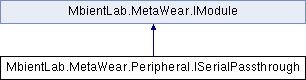
Public Member Functions | |
| II2CDataProducer | I2C (byte id, byte length) |
| Get an object representing the I2C data corresponding to the id. If the id value cannot be matched with an existing object, the API will create a new object using the More... | |
| void | WriteI2C (byte deviceAddr, byte registerAddr, byte[] data) |
| Write data to a connected device via the I2C bus. More... | |
| Task< byte[]> | ReadI2CAsync (byte deviceAddr, byte registerAddr, byte length) |
| Read data from a sensor via the I2C bus. Unlike II2CDataProducer.Read(byte, byte), this function provides a direct way to access I2C data as opposed to creating a data route. More... | |
| ISPIDataProducer | SPI (byte id, byte length) |
| Get an object representing the SPI data corresponding to the id. If the id value cannot be matched with an existing object, the API will create a new object using the More... | |
| void | WriteSPI (byte slaveSelectPin, byte clockPin, byte mosiPin, byte misoPin, byte mode, SpiFrequency frequency, byte[] data, bool lsbFirst=true, bool useNativePins=true) |
| Write data to a connected device via the SPI bus More... | |
| Task< byte[]> | ReadSPIAsync (byte length, byte slaveSelectPin, byte clockPin, byte mosiPin, byte misoPin, byte mode, SpiFrequency frequency, byte[] data=null, bool lsbFirst=true, bool useNativePins=true) |
| Read data from a sensor via the SPI bus. Unlike ISPIDataProducer.Read(byte, byte, byte, byte, byte, SpiFrequency, bool, bool, byte[]), this function provides a direct way to access SPI data as opposed to creating a data route. More... | |
Detailed Description
Bridge for serial communication to connected sensors
Member Function Documentation
◆ I2C()
| II2CDataProducer MbientLab.MetaWear.Peripheral.ISerialPassthrough.I2C | ( | byte | id, |
| byte | length | ||
| ) |
Get an object representing the I2C data corresponding to the id. If the id value cannot be matched with an existing object, the API will create a new object using the
length parameter otherwise the existing object will be returned
- Parameters
-
id Value representing the i2c data, between [0, 254] length Expected length of the data
- Returns
- Object representing I2C data
◆ ReadI2CAsync()
| Task<byte[]> MbientLab.MetaWear.Peripheral.ISerialPassthrough.ReadI2CAsync | ( | byte | deviceAddr, |
| byte | registerAddr, | ||
| byte | length | ||
| ) |
Read data from a sensor via the I2C bus. Unlike II2CDataProducer.Read(byte, byte), this function provides a direct way to access I2C data as opposed to creating a data route.
- Parameters
-
deviceAddr Address of the slave device registerAddr Register on the slave device to access length How many bytes to read
- Returns
- Data read via the I2C bus
◆ ReadSPIAsync()
| Task<byte[]> MbientLab.MetaWear.Peripheral.ISerialPassthrough.ReadSPIAsync | ( | byte | length, |
| byte | slaveSelectPin, | ||
| byte | clockPin, | ||
| byte | mosiPin, | ||
| byte | misoPin, | ||
| byte | mode, | ||
| SpiFrequency | frequency, | ||
| byte [] | data = null, |
||
| bool | lsbFirst = true, |
||
| bool | useNativePins = true |
||
| ) |
Read data from a sensor via the SPI bus. Unlike ISPIDataProducer.Read(byte, byte, byte, byte, byte, SpiFrequency, bool, bool, byte[]), this function provides a direct way to access SPI data as opposed to creating a data route.
- Parameters
-
length Number of bytes to read slaveSelectPin Pin for slave select clockPin Pin for serial clock mosiPin Pin for master output, slave input misoPin Pin for master input, slave output mode SPI operating mode, see SPI Wiki Page frequency SPI operating frequency data Data to write to the device before the read, defaults to null lsbFirst True to have LSB sent first, defaults to true useNativePins True to use the nRF pin mappings rather than the GPIO pin mappings, defaults to true
- Returns
- Data received from the read command
◆ SPI()
| ISPIDataProducer MbientLab.MetaWear.Peripheral.ISerialPassthrough.SPI | ( | byte | id, |
| byte | length | ||
| ) |
Get an object representing the SPI data corresponding to the id. If the id value cannot be matched with an existing object, the API will create a new object using the
length parameter otherwise the existing object will be returned
- Parameters
-
id Value representing the i2c data, between [0, 14] length Expected length of the data
- Returns
- Object representing SPI data
◆ WriteI2C()
| void MbientLab.MetaWear.Peripheral.ISerialPassthrough.WriteI2C | ( | byte | deviceAddr, |
| byte | registerAddr, | ||
| byte [] | data | ||
| ) |
Write data to a connected device via the I2C bus.
- Parameters
-
deviceAddr Device to write to registerAddr Device's register to write to data Data to write, up to 10 bytes
◆ WriteSPI()
| void MbientLab.MetaWear.Peripheral.ISerialPassthrough.WriteSPI | ( | byte | slaveSelectPin, |
| byte | clockPin, | ||
| byte | mosiPin, | ||
| byte | misoPin, | ||
| byte | mode, | ||
| SpiFrequency | frequency, | ||
| byte [] | data, | ||
| bool | lsbFirst = true, |
||
| bool | useNativePins = true |
||
| ) |
Write data to a connected device via the SPI bus
- Parameters
-
slaveSelectPin Pin for slave select clockPin Pin for serial clock mosiPin Pin for master output, slave input misoPin Pin for master input, slave output mode SPI operating mode, see SPI Wiki Page frequency SPI operating frequency data Data to write to the device lsbFirst True to have LSB sent first, defaults to true useNativePins True to use the nRF pin mappings rather than the GPIO pin mappings, defaults to true
The documentation for this interface was generated from the following file:
- MetaWear/Peripheral/ISerialPassthrough.cs